
Businesses constantly weigh asset acquisition against capital preservation. Choosing between lease models dictates cash flow, balance sheet presentation, and tax exposure. Understanding the mechanics behind each arrangement prevents costly accounting missteps and optimizes long term capital allocation. By 2026, corporate finance departments face tighter scrutiny on how they structure equipment and vehicle agreements, making informed choices more critical than ever.
What Is an Operating Lease and How It Functions
An operating lease functions as a short to medium term rental agreement. The lessor retains ownership while the lessee pays periodic fees for usage. This structure traditionally kept the asset off the balance sheet, though modern standards now require recognition of lease liabilities. The primary advantage lies in flexibility. Companies can upgrade equipment without committing to long term ownership. Maintenance, insurance, and residual value risk typically remain with the owner. Organizations deploying this model value predictable expenses and reduced administrative overhead.
- Lower upfront capital requirements
- Simplified end of term return process
- Predictable monthly budgeting
Operating vs Finance Lease: Decision Drivers
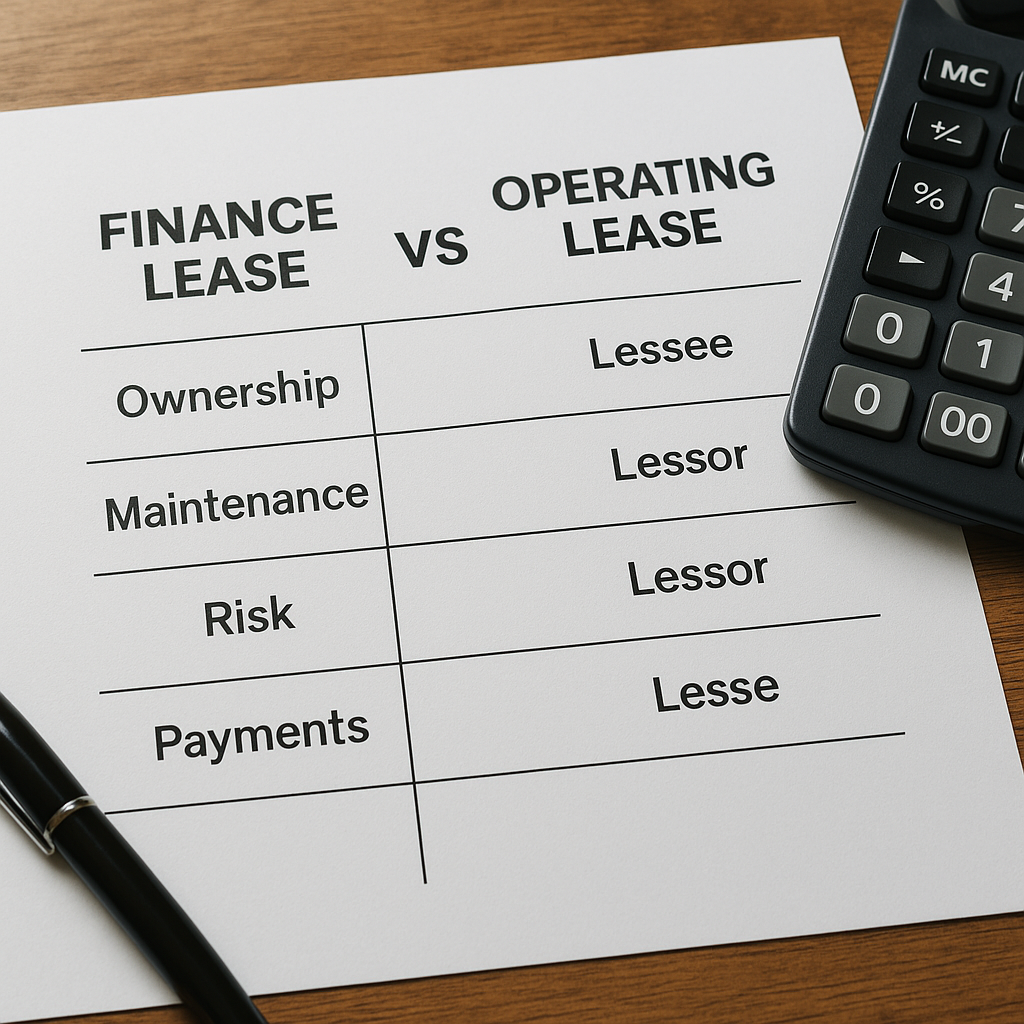
When evaluating asset financing, the distinction boils down to risk transfer and economic substance. A finance lease closely mimics a loan purchase. The lessee assumes most benefits and risks of ownership, records the asset and liability on the books, and often gains a bargain purchase option at term end. In contrast, an operating lease treats the arrangement as a pure service contract. Accounting treatment, tax deductions, and cash flow timing shift dramatically based on this classification. Financial officers must weigh long term ownership against immediate liquidity.
“The choice between lease types ultimately reflects whether a company prioritizes immediate liquidity or long term asset control.”
Operating Lease vs Finance Lease: Structural Comparison
Decision makers evaluate several dimensions before signing agreements. The table below outlines structural differences that impact financial reporting and operational flexibility.
| Criteria | Finance Lease | Operating Lease |
|---|---|---|
| Ownership Transfer | Typically at end of term | Retained by lessor |
| Balance Sheet Impact | Asset and liability recorded | Right of use asset and lease liability under current standards |
| Maintenance Responsibility | Lessee | Usually lessor |
| Term Length | Covers most asset life | Significantly shorter than economic life |
What Is Operating Lease in Modern Business Contexts
Historically, lease structures emerged as medieval land tenure systems evolved into industrial equipment financing. During the twentieth century, corporations heavily utilized off balance sheet arrangements to maintain favorable debt ratios. Regulatory bodies responded by tightening reporting requirements. The transition from IAS 17 to IFRS 16 marked a paradigm shift, forcing nearly all leases onto corporate statements. Despite stricter rules, businesses still favor operating arrangements for rapidly depreciating technology and specialized machinery. The market continues adapting, with hybrid models emerging to address cash flow constraints and supply chain volatility. Modern finnancial teams navigate these shifts with specialized software and updated compliance protocols.
Organizations deploy this framework to manage fleet vehicles, medical imaging systems, and manufacturing robotics. The structure reduces upfront capital outlay and transfers obsolescence risk to specialized providers. Accounting teams must still recognize right of use assets, but the operational burden shifts considerably. Businesses gain agility, allowing them to pivot when market conditions change or technological standards advance. Mangement teams focus on total cost of ownership rather than initial sticker price. Leaseing contracts now include dynamic escalation clauses tied to inflation indices.
For detailed regulatory guidance on lease classification, professionals reference the Financial Accounting Standards Board publications at fasb.org. International entities cross reference International Accounting Standards Board materials available via ifrs.org. Historical context and market evolution are documented in archived financial literature, such as Source: bbc.com.